Clarkstown · Rockland County
Drywall Repair in Nanuet, NY
Cracked seams, split corner bead, water-ringed ceilings and the openings a kitchen or bath remodel leaves behind, closed up and textured to match the wall around them.
Expect a phone call from a Rockland drywall pro to go over the damage and set up a quote; the work starts only once you have agreed to the price.
Call 7 days, 7am–9pm
Rentals and turnovers: notes for owners of leased units
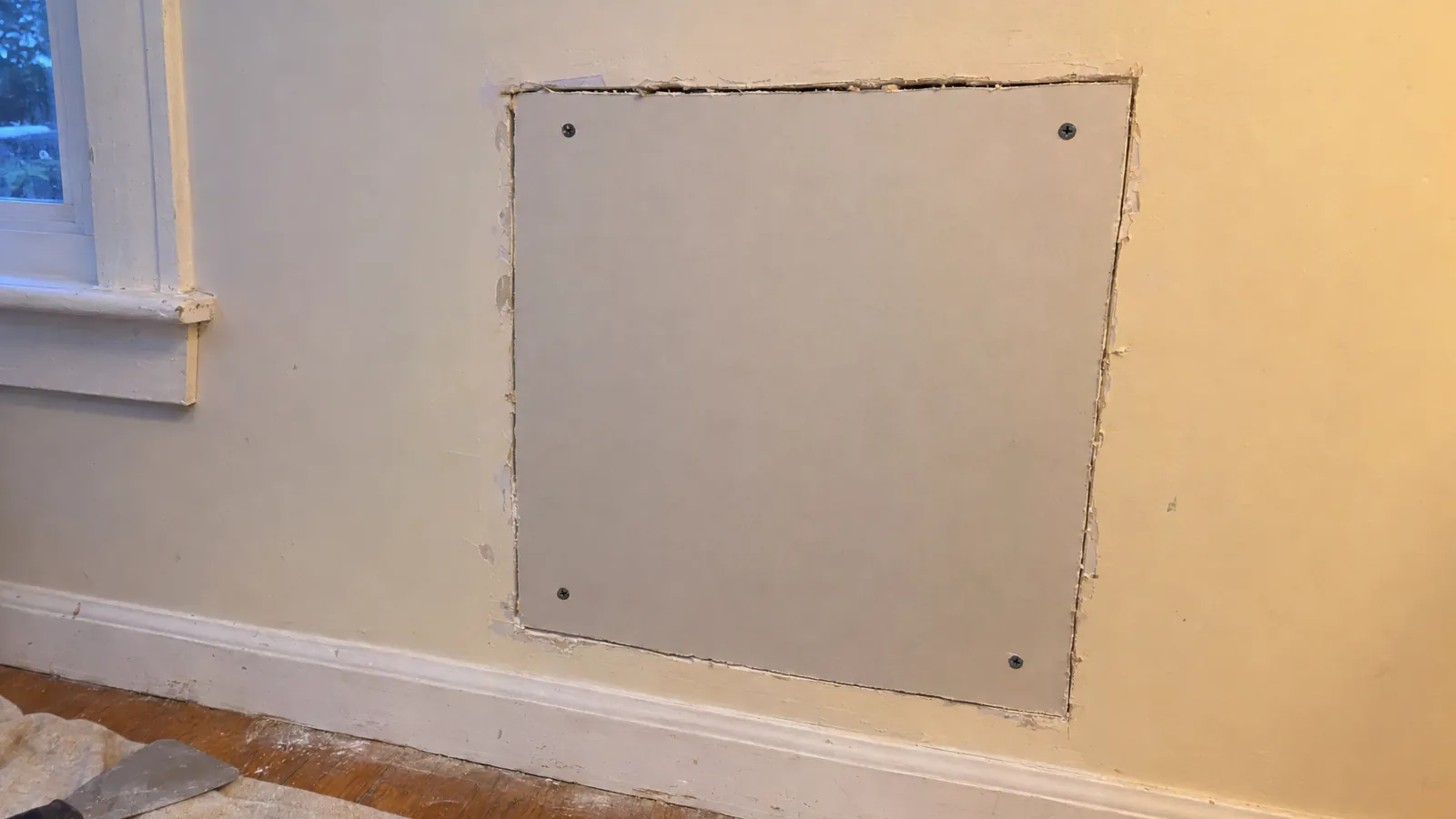
Rented homes are a large part of the housing here. American Community Survey estimates for 2020–2024 show 2,572 renter-occupied homes in the hamlet out of 7,315 occupied ones, about 35 percent, and 1,860 homes sit in buildings of five or more units. A lease ending usually leaves a short, predictable list: anchor holes from shelves and television mounts, a round dent where a door handle hit a wall with no stop, scuffed outside corners in hallways and the odd crack over a door frame.
Turnovers go best when the whole unit is priced in one visit. Walk each room, note every spot and send the list or a few photos. The local pro can then quote the unit as one job and finish it in one stretch, instead of returning room by room. Compound and primer each need their own drying time, and one combined job keeps all of that drying to one stretch before the painter or the next tenant comes in.
Access
For an occupied unit, give the tenant the visit window in writing. Wall repairs need about three feet of clear floor along the damaged wall; ceiling repairs need the furniture under them moved out or covered.
Vacant units
A lockbox, or a spare key left with the super, lets the work run over a few separate trips without anyone waiting at the door.
Leaks from upstairs
A ceiling stain under another apartment needs the leak above stopped first, and the unit above may need its own access arranged.
Paint
Say whether the repairs should be left primed for your painter or painted to match. Flat turnover paint hides patches better than eggshell.
Service pages: seams, ceilings, remodels and holes
Each of these repairs gets a separate page with its causes, the repair steps and the questions people raise first.
- Seam and corner cracksTaped joints and corner bead that split as the framing moves.
- Water-stained ceilingsBrown rings, soft board and sagging panels after a leak.
- Patching after a remodelOpenings left by moved pipes, boxes, cabinets and tile.
- Holes and nail popsDoorknob holes, anchor holes and fasteners backing out.
- Patch and paint blendingWhy a patch shows through new paint, and how it is hidden.
- Communities around the hamletPearl River, Bardonia, Nyack and the rest of the list.
- How a visit is arrangedFrom the first call or photo to a wall ready for paint.
Primer and sheen: keeping a patch from flashing
Joint compound and painted drywall do not take paint the same way. Bare compound is porous and soaks up the binder from the first coat, so paint over it dries flatter than the paint around it. In light from a window the repaired spot reads as a duller square even when the color is exactly right. Painters call this flashing.
A proper repair handles it in three steps. The patch is sanded or sponged flush with the wall. It is sealed with a primer made for drywall so the whole area absorbs evenly. Then the finish coat is rolled over a wider area than the patch, usually out to a corner, a seam or a natural break, so there is no edge for the eye to find.
Sheen matters as much as color. Eggshell, satin and semi-gloss show a patch more than flat paint does. Paint that has been on a wall a long time may also have faded or yellowed, so even the leftover can from the closet can look different. Rolling the whole wall from corner to corner is often the simplest answer.
Texture is the last part. Walls that have been repainted many times carry a light roller stipple. The new surface is textured to match before priming, because primer and paint do not hide a smooth square on a stippled wall.
The quote states who paints. The repair can be left primed for you or your painter, or painted to match. Both are normal. More detail on each step is in the guide to blending a patch into paint.
Dust and floors: how the room is set up first
Sanded compound makes a fine dust that travels on air currents through the house. Most of the protection goes in before the first cut. These are the parts of the setup to ask the pro about when the visit is booked.
- Floors
- Canvas drop cloths or rosin paper taped at the wall line. Plastic sheet alone is slippery under a ladder.
- Furniture
- Pulled into the center of the room under a cover for wall work, or taken out entirely for ceiling work.
- Doorways
- Plastic sheeting with a zipper door, which keeps dust in the work room and still lets people through.
- Vents
- Supply registers and returns covered, and the furnace or air conditioner off during sanding so the furnace fan cannot spread sanding dust to other rooms.
- Sanding
- A sander attached to a HEPA vacuum, or a damp sponge on small patches. Both cut the airborne dust a great deal.
- Your part
- Take pictures, mirrors and fragile items off the nearby walls and clear small furniture before the visit.
Pricing: what makes a repair larger or smaller
There is no single price for drywall repair, because two holes of the same size can need very different work. National figures give a sense of scale. The January 2025 edition of Fixr's national price guide for drywall repair puts most drywall repairs between $200 and $550, holes at about $60 to $200, crack repair at $60 to $330 and water-damage repair in a single room at $400 to $800. These are countrywide numbers and say nothing about the price of a job in Nanuet. The quote for your wall comes after the local pro has seen it.
- Size and countOne fist-sized hole and six anchor holes in one room are both small jobs, but they take different amounts of time.
- Wall or ceilingOverhead work needs ladders or staging and more careful finishing, because ceilings catch side light.
- TextureSmooth walls are the simplest. Matching a stipple, swirl or spray texture takes extra passes.
- MoistureWet board is cut out and the framing dried. The leak itself is dealt with first by the roofing or plumbing trade.
- PaintPrimed only, or painted out to the nearest corner. Painting adds a visit and materials.
- AccessStairwells, high entry ceilings and rooms full of furniture add setup time.
- VisitsEvery coat of compound must dry before the next, so most repairs are spread across two or three trips.
Around the hamlet: towns covered beside Nanuet
Nanuet is a hamlet in the town of Clarkstown, in Rockland County. Repairs are booked here and in the communities that surround it:
- Pearl River, the Orangetown hamlet directly to the south.
- Spring Valley, the village on the west side.
- Chestnut Ridge, a Ramapo village to the west-southwest.
- Bardonia, the Clarkstown hamlet to the northeast.
- West Nyack, the hamlet just east, home to the Palisades Center.
- Nyack, the village farther east.
- Orangeburg, the Orangetown hamlet to the southeast.
A sentence or two on each place is on the page listing every community served.
Townhouses and post-1990 houses: settling and nail pops
Not every house in Nanuet is old. Of the 7,638 homes in the ACS estimates for 2020–2024, 1,626 date from 1990 or later, and 978 are attached one-unit homes such as townhouses. Newer construction has its own short list of drywall problems, and most of them appear while the house is still new.
Nail and screw pops
New studs and joists give up moisture as the house goes through its first winters with the heat on, and they shrink slightly. A fastener that was flush can end up standing proud, leaving a raised disc or a ring-shaped crack in the paint. The repair is a new screw beside it that pulls the board snug to the framing, the old fastener set deeper or removed, and both spots skimmed and primed.
Door-corner cracks
Short diagonal cracks off the corners of doors and windows are common while a new house settles. If they stay hairline and stop growing, they are cosmetic. They are taped rather than caulked, because caulk laid over a crack usually splits right where it did before.
Winter split at the ceiling line
In houses framed with roof trusses, the bottom of a truss can bow upward in winter and lift the ceiling drywall off the inside partition walls. The crack runs along the ceiling line in cold months and may close again in summer. Retaping the corner alone tends to crack again. The usual approach lets the ceiling edge float, with clips or with fasteners moved back from the wall, or covers the joint with trim fixed to the ceiling only.
Do it yourself or book it: where the line sits
Some repairs are reasonable weekend jobs. Others take practice, specific tools or a second trade. The split usually looks like this.
Fine to try
- Nail holes and small anchor holes: lightweight spackle, a light sanding and a spot of primer.
- A single nail pop: drive a drywall screw about an inch and a half from it, then spackle over both.
- Hairline cracks in paint that do not follow a taped seam.
Book a pro
- Holes bigger than a fist, or anything that needs backing behind it.
- Cracks that reopen, or that run along a seam or corner bead.
- Any ceiling stain, because the source has to be found first.
- A sagging or soft ceiling.
- Several rooms before a sale or a move-in date.
- Textured walls, and anything near damp or musty board.
A home patch that went wrong shows as a halo after painting, or as a ridge you can feel with a flat hand on the wall. Both can be sanded back and redone, so trying a small one first does not usually make the later repair bigger.
Overhead work: stains, sags and ceiling seams
Ceiling repairs take more setup than wall repairs and are harder to blend, because light from windows and fixtures rakes across them. These are the usual problems.
Stains
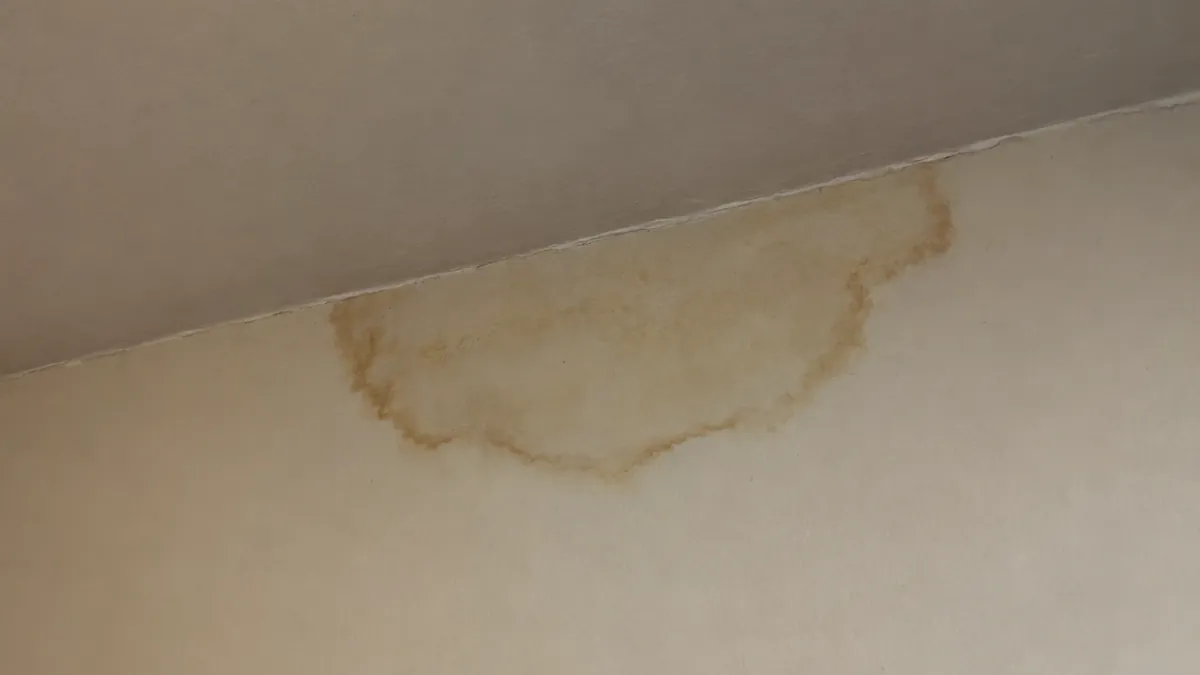
A water ring means water reached the back of the board. The source is found and stopped first: a roof leak, ice backing up under shingles at the roof edge, a bathroom or a supply pipe. When the board is dry again and has not softened, a stain-blocking primer is applied to hold the ring back, then ceiling paint. Ordinary ceiling paint on its own often lets the brown come back through.
Bulges
If a ceiling is bulging or dripping, first cut the power at the panel to the ceiling light or fan in that area. Then make sure no one stands or sits beneath it, and set a bucket below. A bulge holding water can let go without warning. Once the dripping has ended, the soaked board is removed and new board put up in its place rather than patched.
Seams
Ceiling seams that show as straight lines or ridges usually trace back to tape that has come loose, or to board hung with too few fasteners. The lifted tape is sliced away, the board is refastened and the joint is retaped and feathered wider than before.
Texture
Spray or popcorn texture is recreated after the repair with a spray product of similar coarseness. Older textured ceilings can contain asbestos, and a lab test of a small chip comes before any scraping or sanding.
The details for leaks are on the page about repairing a water-stained ceiling.